EN
EN

Product General Information:
| Place of Origin: | Hebei China |
| Brand Name: | JYXD |
| Model Number: | JYXD-2 |
| Certification: | CE 、ISO9001 |
Commercial Terms of Products:
| Minimum Order Quantity: | 1000㎡ |
| Price: | 30.0-50.0 $/㎡ |
| Packaging Details: | Container/Wooden box |
| Delivery Time: | 30-45 Days |
| Payment Terms: | T/T |
| Supply Ability: | 50,000㎡/month |
| Unit Length | Unit Width | Height | |
| Column | Top | ||
| 4.0m/8.0m | 8.0-12.0m | 4.0-6.0m | 5.5-7.5m |
Description:
I. Structural Features
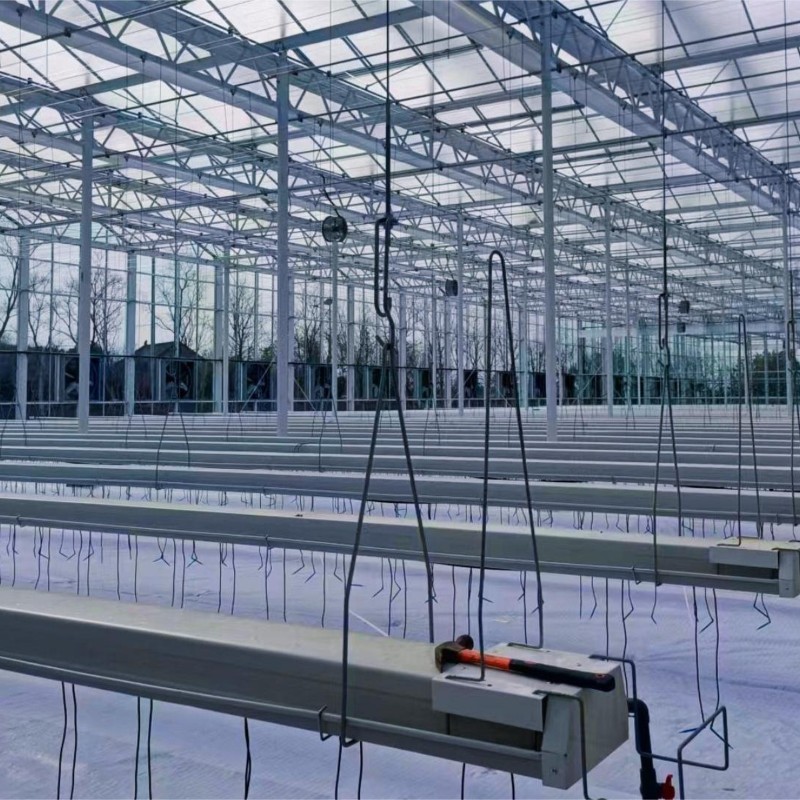
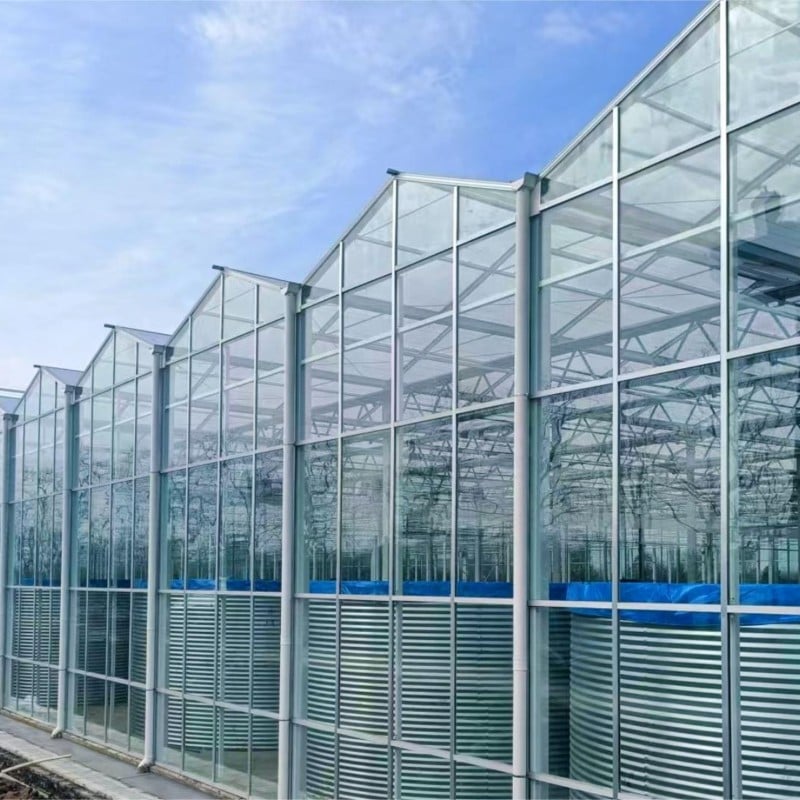
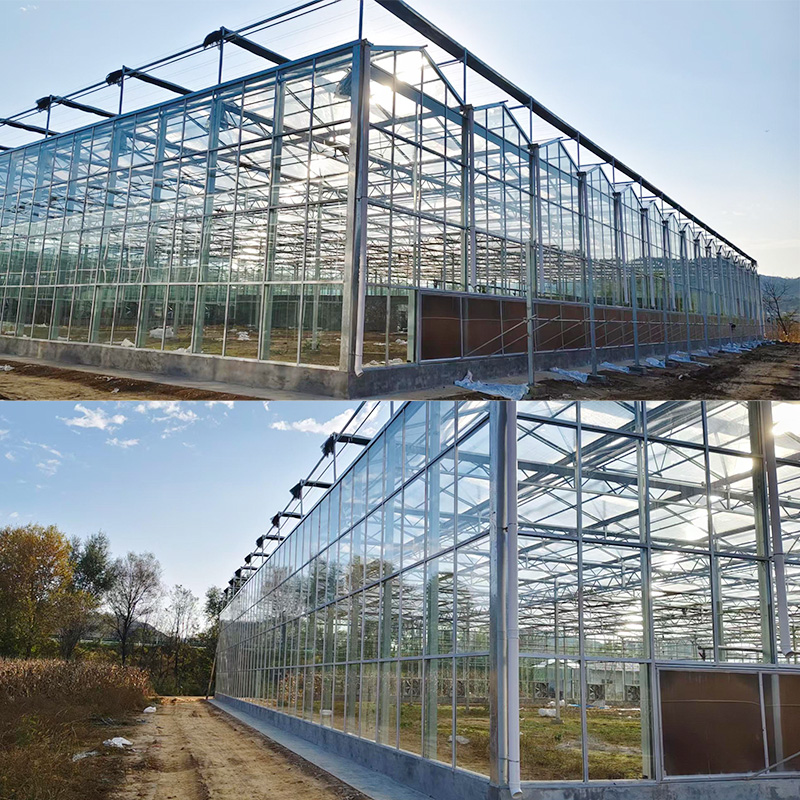
The core feature of a glass greenhouse is a closed structure primarily covered with glass and supported by a metal frame (typically aluminum alloy or steel). Its typical structure includes:
✦ Covering Material: Usually single or double-layer float glass, tempered glass, or insulated glass. Modern high-end greenhouses may also use ultra-clear, anti-reflective glass with high light transmittance.
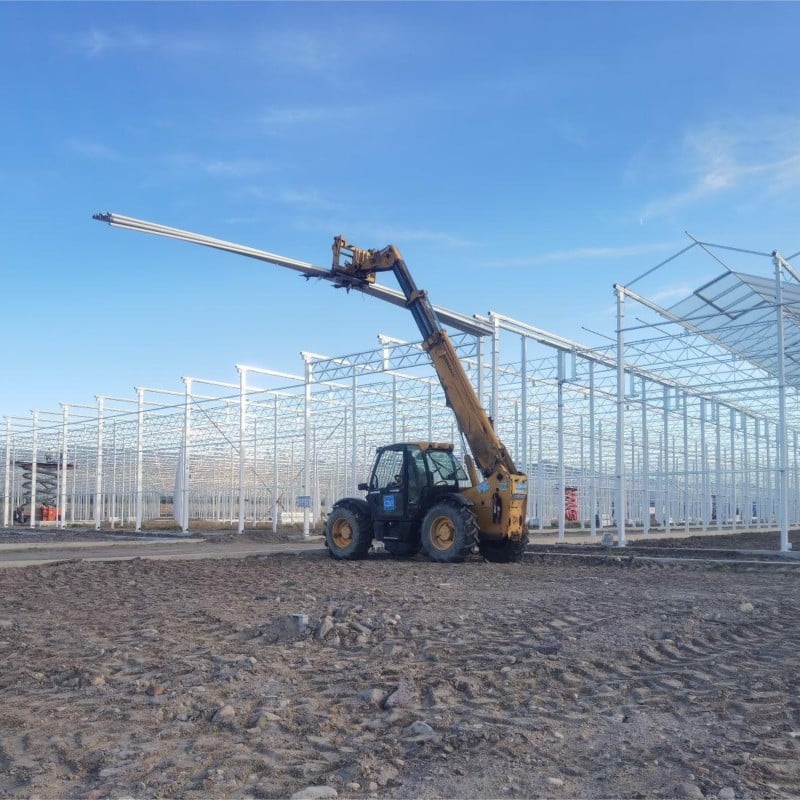
✦ Frame System: Composed of columns, trusses, gutters (drainage channels), and rafter beams, forming a sturdy load-bearing system capable of supporting the weight of the glass and withstanding wind and snow loads.
✦ Ancillary Systems: It functions as an "intelligent shell," integrating natural ventilation systems (roof vents, side vents), shading and insulation systems (internal/external shading nets, thermal screens), cooling systems (pad-fan systems), heating systems, and environmental control systems (computer-automated regulation of temperature, light, water, air, and nutrients).
II. Main Advantages
✦ Excellent and Long-Lasting Light Transmission: Glass offers high light transmittance (90%) with uniform distribution, and its transmittance does not degrade over time. This provides plants with long-term, stable, and optimal lighting conditions, directly promoting higher yield and quality.
✦ Precise Environmental Control: Its superior airtightness enables highly efficient and precise control of environmental factors such as temperature, humidity, and CO₂ concentration, facilitating intelligent, automated management of the crop growth environment.
✦ High Durability and Stability: Glass is corrosion-resistant, anti-aging, and has a long service life (over 20 years). The robust structure can withstand harsh weather, and maintenance costs are relatively low.
✦ Spaciousness and Aesthetics: The internal design typically features few or no columns, maximizing space utilization and facilitating mechanized operations. Its modern and clean appearance combines functionality with visual appeal.
III. Application Scenarios
Due to their performance characteristics and investment profile, glass greenhouses are primarily used in the following high-value or high-demand sectors:
✦ High-Tech Agriculture and Seedling Propagation: Used for year-round commercial production of high-value vegetables and flowers (e.g., roses, orchids) and industrialized seedling cultivation, where requirements for quality and yield stability are extremely high.
✦ Scientific Research and Education: Serves as an experimental platform for agricultural research institutions and universities, used for plant physiology research, new variety breeding, cultivation technique validation, etc.
✦ Eco-Tourism and Display: Employed in botanical gardens, eco-restaurants, agri-tourism parks, and science education centers. Their transparent and bright nature provides an aesthetically pleasing visitor experience.
✦ Agriculture in Special Climate Zones: In cold or temperate regions with insufficient sunlight, they maximize solar gain to overcome natural climatic limitations and enable efficient off-season production.
In summary, a glass greenhouse is a modern agricultural facility characterized by high-performance glass covering, a robust structure, and strong environmental controllability. Its core advantage lies in providing top-tier, stable lighting and growing conditions. Therefore, it is primarily deployed in modern agriculture, scientific research, and leisure/ tourism industries that demand high standards for production precision, product quality, and long-term operation.

Copyright © 2026 Hebei Juyou Xinda Greenhouse Facilities Co.,Ltd. All rights reserved. — Privacy Policy