 EN
EN



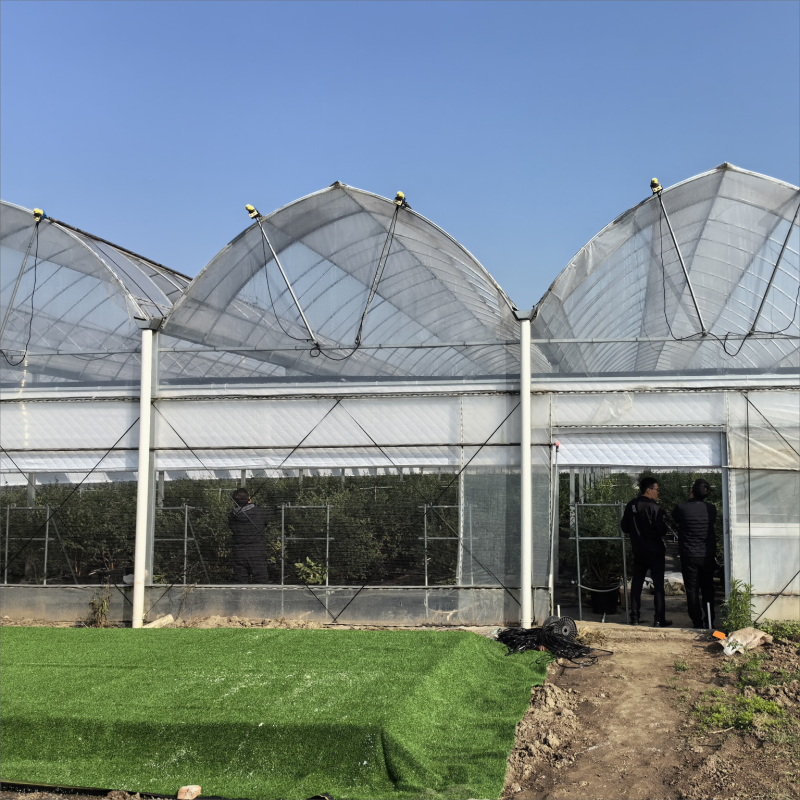
Selecting the right greenhouse structure represents one of the most critical decisions for commercial growers, agricultural operations, and institutional facilities planning long-term cultivation infrastructure. While smaller greenhouse units offer entry-level accessibility and modular simplicity, a large greenhouse delivers transformative advantages in operational efficiency, environmental control precision, production volume, and economic return on investment that fundamentally reshape cultivation capabilities. Understanding why a large greenhouse outperforms smaller structures requires examining the interconnected factors of climate management uniformity, labor productivity optimization, energy utilization efficiency, and scalability potential that emerge only at expanded dimensions.
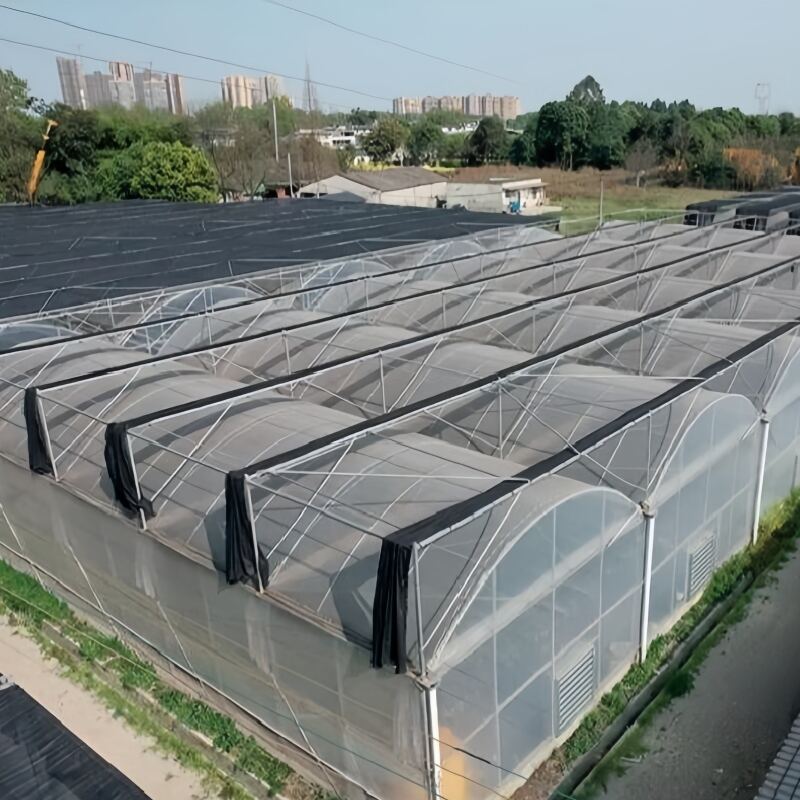
The decision between a large greenhouse and multiple smaller structures extends beyond simple square footage calculation to encompass fundamental differences in climate buffer capacity, automation integration feasibility, crop management uniformity, and per-unit production cost structure. A large greenhouse creates a more stable and controllable growing environment through increased thermal mass and reduced surface-area-to-volume ratio, while simultaneously enabling centralized systems that would be economically prohibitive to replicate across dispersed smaller units. These structural and operational advantages compound over time, creating performance differentials that directly impact crop quality consistency, harvest timing precision, resource consumption efficiency, and ultimately profitability margins that separate viable commercial operations from marginal ventures.
Climate Stability and Environmental Control Superiority
Thermal Mass Advantages in Large Greenhouse Environments
A large greenhouse inherently possesses superior thermal stability compared to smaller structures due to fundamental physics governing heat transfer and temperature fluctuation patterns. The expanded volume-to-surface-area ratio characteristic of a large greenhouse means that external temperature changes exert proportionally less influence on internal conditions, creating a natural buffering effect that reduces temperature swing amplitude during day-night transitions and seasonal weather fluctuations. This thermal inertia translates directly into reduced heating and cooling system cycling frequency, lower energy consumption for climate maintenance, and more consistent growing conditions that minimize plant stress responses.
The air volume contained within a large greenhouse functions as a thermal reservoir that absorbs and releases heat gradually rather than responding rapidly to external conditions. During cold nights, the accumulated warmth in soil, structural elements, water features, and air mass itself radiates slowly, maintaining more stable minimum temperatures with less supplemental heating input. Conversely, during hot days, the thermal mass prevents rapid overheating that smaller structures experience, reducing ventilation demands and maintaining optimal photosynthetic temperature ranges for extended periods. Commercial growers operating large greenhouse facilities consistently report tighter temperature variance bands compared to operations using multiple smaller units under identical external weather conditions.
Humidity Management and Vapor Pressure Deficit Control
Maintaining optimal humidity levels and vapor pressure deficit parameters becomes significantly more manageable within a large greenhouse environment where air volume dilutes localized moisture sources and transpiration events. Smaller structures struggle with rapid humidity spikes following irrigation events or during periods of intensive plant transpiration, creating condensation risks, disease pressure elevation, and suboptimal growing conditions that require constant ventilation adjustments. The expanded air mass in a large greenhouse absorbs moisture releases more gradually, enabling more precise humidity control through centralized dehumidification or ventilation systems that maintain target ranges without the dramatic oscillations characteristic of confined spaces.
The uniformity of humidity distribution across a large greenhouse cultivation area further contributes to consistent crop development and quality outcomes. Smaller structures frequently exhibit significant humidity gradients between perimeter zones near ventilation openings and interior areas with restricted air movement, creating microclimate variations that produce uneven crop maturity and quality inconsistency within the same production batch. A properly designed large greenhouse employs horizontal airflow fans, properly positioned ventilation systems, and adequate mixing capacity to achieve humidity uniformity that eliminates these problematic gradients, ensuring every plant experiences nearly identical growing conditions regardless of position within the structure.
Light Distribution and Photosynthetic Efficiency
The architectural design possibilities enabled by a large greenhouse allow for optimized light transmission and distribution patterns that maximize photosynthetic productivity across the entire cultivation area. Taller ceiling heights characteristic of commercial-scale large greenhouse structures reduce shadowing from structural members, support systems, and overhead equipment while enabling better light penetration to lower canopy levels. The ability to orient a large greenhouse along optimal solar angles and incorporate ridge-and-furrow or curved roof profiles enhances light capture throughout daily sun path variations, particularly during winter months when solar elevation angles are lowest and light availability becomes the primary growth-limiting factor.
Large greenhouse facilities also provide the structural capacity and economic justification for supplemental lighting systems that would be prohibitively expensive to implement across multiple smaller structures. The centralized electrical infrastructure, reduced installation complexity, and economies of scale for lighting equipment procurement make high-intensity discharge or LED supplemental lighting systems financially viable within a large greenhouse context. These lighting investments deliver measurable returns through extended growing seasons, accelerated crop cycles, improved winter production quality, and the ability to cultivate light-demanding crops year-round in regions where natural photoperiods would otherwise limit production windows.
Operational Efficiency and Labor Productivity Gains
Workflow Optimization Through Consolidated Space
Operating a large greenhouse fundamentally transforms labor efficiency through consolidated workspace that eliminates the time wastage and physical effort associated with moving between multiple disconnected smaller structures. Workers can complete planting, maintenance, monitoring, and harvest activities within a continuous climate-controlled environment without repeatedly transitioning between outdoor conditions and controlled spaces, donning and removing protective equipment, or transporting materials across exposed areas subject to weather interference. This workflow continuity translates directly into measurable productivity improvements, with time-motion studies consistently demonstrating twenty to thirty percent labor efficiency gains when comparing equivalent production area consolidated within a large greenhouse versus distributed across smaller units.
The spatial organization possibilities within a large greenhouse enable logical production flow layouts that minimize unnecessary movement and optimize task sequencing. Growers can establish dedicated zones for propagation, vegetative growth, flowering or fruiting, and harvest preparation arranged in production sequence, allowing materials and crops to flow systematically through the cultivation cycle without backtracking or cross-contamination risks. Centralized packing areas, integrated irrigation mixing stations, and consolidated tool storage positioned within the large greenhouse envelope further reduce non-productive travel time and improve task completion rates compared to operations where these support functions must be duplicated or accessed externally across multiple smaller buildings.
Automation Integration and Technology Implementation
The economic justification for advanced automation systems strengthens dramatically within a large greenhouse where capital investments in climate control computers, fertigation management systems, motorized shade systems, and robotic handling equipment can be amortized across substantially larger production volumes. Implementing sophisticated environmental monitoring with distributed sensor networks, automated irrigation valves, and computer-controlled ventilation becomes financially practical when managing thousands of square meters within a single large greenhouse, whereas the per-unit cost of duplicating these systems across multiple smaller structures often exceeds budget constraints for comparable operations. This technology access gap creates competitive advantages for large greenhouse operators who can leverage precision agriculture tools that remain economically inaccessible to smaller facility operators.
The integration complexity and maintenance requirements for automated systems also favor consolidated large greenhouse installations over distributed smaller structures. A centralized climate control system managing a large greenhouse requires only one set of programming expertise, calibration procedures, and troubleshooting protocols, whereas managing multiple smaller structures demands either system replication with multiplied maintenance burden or acceptance of less sophisticated control strategies. Software updates, sensor calibration, and system optimization activities consume similar time whether managing one large greenhouse or multiple smaller units, making the per-area effort investment far more efficient at scale. Additionally, the stable network connectivity and electrical infrastructure inherent in a large greenhouse facility supports advanced data logging, remote monitoring, and integration with enterprise resource planning systems that transform operational decision-making capabilities.
Supervision and Quality Control Effectiveness
Managing crop quality and identifying developing problems occurs more effectively within a large greenhouse where supervisory personnel can observe the entire production area efficiently during routine walk-throughs rather than traveling between disconnected smaller structures. Early detection of pest emergence, disease symptoms, nutritional deficiencies, or irrigation system malfunctions becomes more reliable when visual inspection can cover large production areas within minutes, enabling intervention before localized problems escalate into widespread issues. The continuous visual access characteristic of a large greenhouse environment also facilitates more effective worker supervision, quality standard enforcement, and immediate corrective guidance compared to operations where supervisors must travel between separate buildings to monitor work quality and provide direction.
The ability to maintain consistent growing protocols across the entire production area within a large greenhouse eliminates the protocol drift and inconsistent implementation that frequently occurs when managing multiple smaller structures where individual operators develop slightly different practices over time. Centralized mixing of nutrient solutions, unified pest management programs, and standardized irrigation scheduling become inherently easier to enforce within a single large greenhouse environment, resulting in improved crop uniformity and reduced quality variation that directly impacts marketability and customer satisfaction. Commercial growers consistently report that quality control becomes more manageable and outcomes more predictable after consolidating production from multiple smaller structures into purpose-built large greenhouse facilities.
Economic Performance and Return on Investment
Capital Cost Efficiency at Scale
The per-square-meter construction cost for a properly designed large greenhouse typically falls twenty-five to forty percent below the equivalent cost of achieving the same total area through multiple smaller structures due to economies of scale in materials procurement, reduced perimeter-to-area ratio, and installation efficiency gains. A large greenhouse requires proportionally less foundation work, fewer entrance vestibules, reduced utility connection points, and minimized redundant structural elements compared to multiple smaller buildings providing equivalent growing space. These capital cost advantages extend beyond initial construction to encompass reduced permitting complexity, simplified site preparation, and consolidated utility infrastructure that collectively lower the total project investment required to achieve target production capacity.
The structural efficiency inherent in a large greenhouse design allows material optimization that becomes impossible in smaller structures where minimum structural requirements create over-engineering relative to load demands. Longer spans between support columns, shared load-bearing capacity across expanded roof areas, and elimination of redundant end walls all contribute to material usage efficiency that directly reduces construction costs without compromising structural integrity or functional performance. Additionally, construction crews working on a large greenhouse project achieve productivity rhythms and learning curve efficiencies that reduce labor hours per installed square meter compared to the repeated mobilization, setup, and familiarization cycles required when building multiple smaller structures sequentially or coordinating parallel construction across separate sites.
Operating Cost Reduction Through System Centralization
Energy consumption per unit of production area decreases significantly within a large greenhouse compared to smaller structures due to reduced surface area relative to volume, centralized climate control equipment operating at optimal efficiency points, and elimination of redundant heating, cooling, and ventilation systems. A single large boiler or heating system serving a large greenhouse operates more efficiently than multiple smaller units that experience frequent cycling, part-load inefficiency, and higher standby losses. Similarly, centralized ventilation fans, circulation fans, and cooling systems achieve better performance per watt consumed compared to distributed smaller units that cannot leverage variable frequency drives and staging strategies as effectively within limited capacity ranges.
The maintenance cost structure for a large greenhouse also demonstrates significant advantages over multiple smaller structures requiring separate equipment servicing, replacement parts inventory, and technical service calls. Consolidated systems mean fewer pieces of equipment requiring routine maintenance, simplified spare parts management, and more efficient use of maintenance personnel time when conducting preventive maintenance or responding to equipment failures. Insurance costs, property taxes in some jurisdictions, and ongoing regulatory compliance expenses often scale more favorably for a single large greenhouse facility compared to multiple smaller structures that may trigger separate assessments, inspections, or administrative burdens despite serving identical production functions.
Revenue Enhancement Through Production Optimization
The superior environmental control, crop uniformity, and quality consistency achievable within a large greenhouse directly translate into revenue advantages through premium pricing access, reduced rejection rates, and improved market timing precision. Buyers for retail chains, food service distributors, and wholesale markets consistently express preference for suppliers who can deliver large volumes of consistent quality product, a requirement that large greenhouse operations can fulfill more reliably than producers operating multiple smaller structures where batch variation and quality inconsistency create supply chain complications. The ability to harvest and deliver truckload quantities of uniform product from a single location reduces handling costs, simplifies logistics coordination, and strengthens negotiating position with buyers seeking reliable supply partners.
The production flexibility enabled by a large greenhouse also creates revenue opportunities through crop diversification, succession planting strategies, and rapid variety changeovers that respond to market demand shifts more effectively than rigid smaller structure configurations. A large greenhouse can accommodate multiple crop zones, trial areas for new varieties, and experimental sections for production technique optimization without sacrificing overall production efficiency, creating learning opportunities and market responsiveness that strengthen competitive positioning. Additionally, the professional image and perceived reliability associated with modern large greenhouse facilities enhances marketing effectiveness, facilitates food safety certification processes, and supports premium branding strategies that command higher prices compared to production from smaller, less sophisticated structures.
Scalability and Future Expansion Capabilities
Production Growth Accommodation
A large greenhouse inherently supports business growth more effectively than smaller structures through simplified expansion options, modular extension capabilities, and infrastructure that anticipates increased capacity demands. Modern large greenhouse designs typically incorporate expansion provisions such as removable end walls, utility systems sized for future capacity additions, and site layouts that accommodate longitudinal extensions without disrupting existing production areas. When market demand increases or business plans call for capacity expansion, adding length to an existing large greenhouse requires significantly less capital investment and construction disruption compared to building entirely new separate structures, while maintaining operational continuity throughout the expansion process.
The foundation systems, structural frameworks, and environmental control infrastructure installed in a properly designed large greenhouse can typically support substantial capacity increases through relatively straightforward extension projects that leverage existing investments rather than duplicating support systems. Electrical service panels sized with excess capacity, heating systems designed with expansion allowances, and irrigation main lines installed with future zones in mind all reduce the marginal cost and complexity of subsequent expansion phases. This built-in scalability creates strategic flexibility that allows greenhouse businesses to match capacity investments with actual market development rather than committing to oversized infrastructure prematurely or being constrained by undersized facilities that limit growth potential.
Technology Upgrade Pathways
The long service life expectancy of a well-constructed large greenhouse means that operations will inevitably need to upgrade control systems, adopt new growing technologies, and retrofit improved equipment over multi-decade operational periods. A large greenhouse provides the physical space, structural capacity, and system accessibility that facilitate these technology upgrades without fundamental reconstruction or operational disruption. Adding supplemental lighting systems, installing automated shade curtains, implementing carbon dioxide enrichment, or retrofitting advanced climate sensors becomes far more practical within a large greenhouse where adequate clearances, load-bearing capacity, and equipment access already exist compared to smaller structures where physical constraints often prevent technology adoption or require expensive structural modifications.
The economic justification for investing in emerging technologies also strengthens within a large greenhouse context where the improved performance or efficiency gains can be captured across larger production volumes, accelerating payback periods and improving return on investment metrics. Early adoption of beneficial innovations becomes financially viable for large greenhouse operators while remaining prohibitively expensive for smaller structure operations that cannot amortize technology investments across sufficient production volume. This technology access advantage compounds over time, creating growing performance gaps between operations that can continuously modernize large greenhouse facilities and those constrained by smaller structure limitations that prevent cost-effective technology integration.
Market Position and Competitive Resilience
Operating a large greenhouse establishes market positioning advantages that strengthen competitive resilience against both traditional field production and other protected cultivation competitors. The production volume capabilities, quality consistency, supply reliability, and year-round availability characteristic of professional large greenhouse operations create customer relationships and market access that smaller producers struggle to achieve. Major retail chains, food service companies, and distribution networks increasingly consolidate supplier relationships with larger producers who can meet volume requirements, maintain quality standards, and provide supply continuity, creating market access barriers that favor large greenhouse operators over fragmented smaller producers.
The financial stability and operational efficiency associated with a well-managed large greenhouse also provides resilience during market downturns, input cost increases, or competitive pressure periods that eliminate marginal producers operating less efficient smaller structures. Lower per-unit production costs, stronger buyer relationships, and operational flexibility allow large greenhouse operations to maintain profitability through challenging market conditions while competitors struggle with inadequate margins. This competitive resilience protects the substantial capital investment required for large greenhouse development and positions operations for long-term success in evolving agricultural markets increasingly dominated by consolidated retail channels and quality-conscious consumers willing to pay premiums for consistent, locally-grown produce available year-round.
FAQ
What minimum size qualifies as a large greenhouse for commercial production?
A large greenhouse for commercial production typically encompasses at least one acre or approximately 4,000 square meters of growing area under a single connected structure, though many professional operations consider facilities exceeding 10,000 square meters as truly achieving the economies of scale and operational efficiencies that define large greenhouse advantages. The specific size threshold depends somewhat on crop type and regional market context, but the defining characteristic involves sufficient scale to justify centralized automation systems, professional management, and specialized production techniques that become economically viable only at expanded dimensions that exceed hobby or small market garden operations.
Can a large greenhouse be profitable for small to medium farming operations?
A large greenhouse can indeed be profitable for small to medium farming operations when properly scaled to match realistic market access, management capabilities, and financial resources, though success requires careful business planning that aligns facility size with actual market demand rather than simply maximizing production capacity. Many successful operations begin with a moderately sized large greenhouse in the 5,000 to 15,000 square meter range that provides meaningful economic advantages over smaller structures while remaining manageable for owner-operator businesses or small teams, then expand incrementally as markets develop and operational expertise grows rather than immediately building the largest facility that financing might permit.
How does a large greenhouse compare to multiple smaller units for crop diversification?
A large greenhouse actually provides superior crop diversification capabilities compared to multiple smaller structures through the ability to create distinct climate zones within the unified envelope using partition curtains, localized environmental controls, and sectioned growing areas that maintain different temperature, humidity, or photoperiod regimes while still benefiting from shared infrastructure and consolidated management. The environmental independence between completely separate smaller structures offers no practical advantage over properly designed zones within a large greenhouse, while the smaller structures impose significant operational inefficiencies, duplicated costs, and labor productivity penalties that undermine the economic viability of diversified production strategies that large greenhouse designs accommodate more cost-effectively.
What are the main challenges when transitioning from smaller structures to a large greenhouse?
The primary challenges when transitioning from smaller structures to a large greenhouse involve scaling management systems to handle increased complexity, developing staff capabilities to operate more sophisticated equipment and controls, implementing formalized production protocols that replace informal practices adequate for smaller operations, and managing the substantial capital investment required for modern large greenhouse construction. Successful transitions typically involve phased approaches that maintain existing production during new facility development, comprehensive training programs that prepare teams for expanded operational responsibilities, and conservative financial planning that ensures adequate working capital for the crop cycles required to optimize production systems and establish market channels capable of absorbing significantly increased output volumes from the new large greenhouse facility.
Table of Contents
- Climate Stability and Environmental Control Superiority
- Operational Efficiency and Labor Productivity Gains
- Economic Performance and Return on Investment
- Scalability and Future Expansion Capabilities
-
FAQ
- What minimum size qualifies as a large greenhouse for commercial production?
- Can a large greenhouse be profitable for small to medium farming operations?
- How does a large greenhouse compare to multiple smaller units for crop diversification?
- What are the main challenges when transitioning from smaller structures to a large greenhouse?