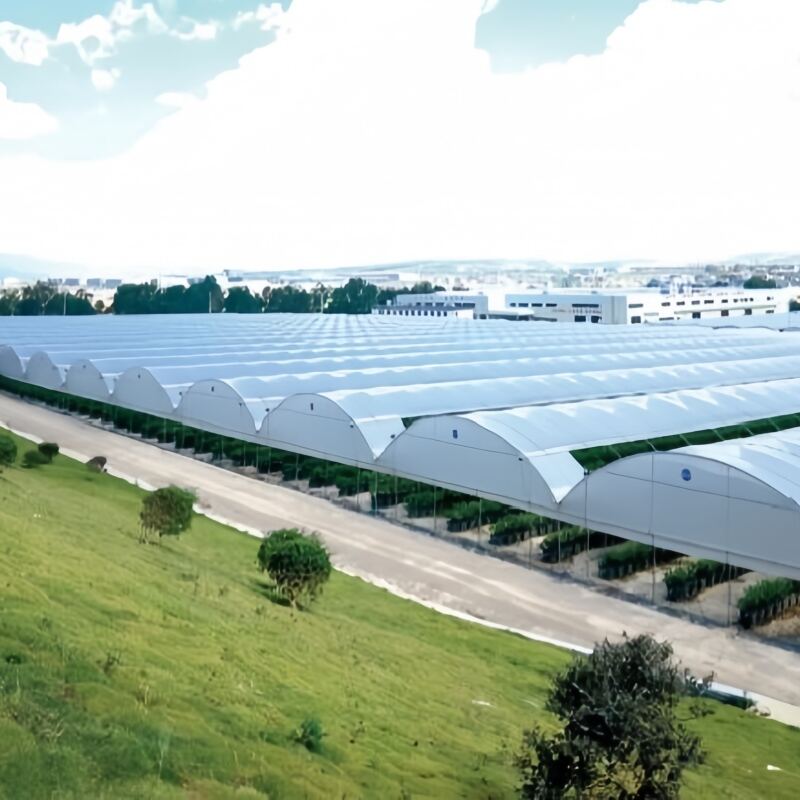
Tall Greenhouse Systems: Maximize Growing Space with Advanced Vertical Agriculture Technology

Welcome To JYXD-greenhouse

Get a Free Quote

Our representative will contact you soon.
Email
Tel or Whatsapp
Name
Company Name
Message
0/1000

tall greenhouse

A tall greenhouse represents a revolutionary approach to controlled environment agriculture, offering vertical growing space that maximizes crop production within a limited footprint. These impressive structures typically stand between 15 to 30 feet in height, providing multiple growing levels that dramatically increase cultivation capacity compared to traditional greenhouse designs. The tall greenhouse incorporates advanced engineering principles to support heavy crop loads while maintaining optimal growing conditions throughout the vertical space. Modern tall greenhouse systems feature sophisticated climate control technology that ensures uniform temperature, humidity, and air circulation from ground level to the highest growing platforms. These structures utilize high-strength materials including galvanized steel frameworks, polycarbonate panels, and reinforced foundations designed to withstand wind loads and support equipment weight. The tall greenhouse design enables growers to implement multi-tier cultivation systems, hydroponic towers, and vertical growing racks that can triple or quadruple production output. Key technological features include automated irrigation systems with precision nutrient delivery, LED lighting arrays positioned at multiple levels, and advanced ventilation systems that prevent heat buildup in upper zones. Environmental sensors monitor conditions throughout the vertical space, providing real-time data for optimal crop management. The tall greenhouse serves diverse agricultural applications including commercial vegetable production, herb cultivation, flower growing, and research facilities. These structures excel in urban farming operations where land costs are premium, allowing operators to maximize returns per square foot. The tall greenhouse also supports year-round production cycles, enabling continuous harvests regardless of external weather conditions. Integration with renewable energy systems, rainwater collection, and waste heat recovery makes the tall greenhouse an environmentally sustainable choice for modern agriculture operations seeking to optimize space utilization while maintaining high production standards.
New Product Releases

The tall greenhouse delivers exceptional space efficiency that transforms how growers approach cultivation planning and profit maximization. By utilizing vertical growing space, operators can achieve three to five times the production capacity of conventional horizontal greenhouses on the same ground footprint. This space optimization proves especially valuable in urban environments where real estate costs are high and available land is limited. The tall greenhouse design allows growers to diversify crop selection across different vertical levels, creating multiple microclimates within a single structure. Upper levels can accommodate heat-loving crops while lower zones support cool-season vegetables, maximizing the utility of every cubic foot of growing space. Climate control systems in the tall greenhouse operate more efficiently due to the thermal stratification principles that naturally occur in vertical structures. Warm air rises to upper levels where it can be captured and redistributed, reducing heating costs during cooler months. The tall greenhouse structure provides superior protection from external weather extremes, pests, and diseases compared to field cultivation. Multiple growing levels create redundancy that protects against crop loss, ensuring consistent production even if one level experiences issues. Labor efficiency improves significantly in the tall greenhouse environment where workers can access crops at comfortable working heights without constant bending or kneeling. Automated systems integrated throughout the tall greenhouse reduce manual labor requirements while increasing precision in crop care activities. The controlled environment enables year-round production schedules that generate consistent revenue streams regardless of seasonal weather patterns. Water usage becomes more efficient in the tall greenhouse through recirculating hydroponic systems and precision irrigation that reduces waste. The tall greenhouse supports sustainable agriculture practices by minimizing pesticide use, eliminating soil degradation, and reducing transportation needs for locally grown produce. Investment returns accelerate due to the increased production capacity and premium pricing for greenhouse-grown crops. The tall greenhouse structure also provides flexibility for future expansion or modification as business needs evolve, making it a smart long-term investment for commercial growers.

Latest News

Forging a Powerful Alliance: Netafim and Juyou Xinda Unite to Reshape the Future of Smart Agriculture

28

Nov

Forging a Powerful Alliance: Netafim and Juyou Xinda Unite to Reshape the Future of Smart Agriculture

View More
Australian Greenhouse Company Visits Our Facilities to Explore New Collaboration on 50,000 Sq.m Strawberry Glass Greenhouse Project

28

Nov

Australian Greenhouse Company Visits Our Facilities to Explore New Collaboration on 50,000 Sq.m Strawberry Glass Greenhouse Project

View More
 Innovative Breakthrough: Our Company Successfully Delivers World's First Customized

28

Nov

Innovative Breakthrough: Our Company Successfully Delivers World's First Customized "Greenhouse for Fertilizer Drying" to Malaysian Client

View More

Get a Free Quote

Our representative will contact you soon.
Email
Tel or Whatsapp
Name
Company Name
Message
0/1000

tall greenhouse

Maximum Vertical Growing Capacity

Maximum Vertical Growing Capacity

The tall greenhouse revolutionizes agricultural productivity by transforming traditional horizontal growing methods into sophisticated vertical cultivation systems. This innovative approach allows farmers and commercial growers to achieve unprecedented production levels within constrained land areas. The tall greenhouse structure typically accommodates three to five growing levels, each optimized for specific crop requirements and growth stages. Advanced structural engineering ensures that each level receives adequate support while maintaining accessibility for maintenance and harvesting operations. The vertical growing capacity of the tall greenhouse enables diversified crop production strategies where different plant varieties can be cultivated simultaneously at various heights. Root vegetables and leafy greens thrive in lower levels where cooler temperatures naturally occur, while fruit-bearing plants and flowering species benefit from the warmer conditions found in upper zones. This stratified approach to crop selection maximizes the biological potential of the tall greenhouse environment while optimizing resource utilization. Hydroponic towers and multi-tier growing systems integrate seamlessly into the tall greenhouse design, allowing for continuous production cycles that generate harvest-ready crops every few weeks rather than seasonal harvests. The vertical arrangement also facilitates efficient crop rotation practices where harvested areas can be immediately replanted without disrupting adjacent growing zones. Lighting systems in the tall greenhouse are strategically positioned at each level to ensure photosynthetic requirements are met throughout the vertical space. LED arrays provide targeted spectrum lighting that can be adjusted based on crop type and growth stage, creating optimal growing conditions regardless of external light availability. The tall greenhouse vertical capacity also supports research and development activities where multiple crop varieties can be tested simultaneously under controlled conditions. This capability proves invaluable for seed companies, agricultural universities, and commercial growers seeking to optimize their cultivation practices and develop new growing techniques.
Advanced Climate Control Technology

Advanced Climate Control Technology

The tall greenhouse incorporates cutting-edge environmental management systems that maintain optimal growing conditions throughout the entire vertical growing space. Sophisticated climate control technology ensures that temperature, humidity, air circulation, and atmospheric composition remain within precise parameters required for maximum crop productivity. Multi-zone climate management allows different areas of the tall greenhouse to maintain distinct environmental conditions simultaneously, accommodating diverse crop requirements within a single structure. Advanced sensor networks continuously monitor environmental parameters at multiple height levels, providing real-time data that enables automated adjustments to heating, cooling, and ventilation systems. The tall greenhouse utilizes thermal stratification principles to optimize energy efficiency, capturing and redistributing heat naturally generated within the structure. Automated ventilation systems prevent the buildup of excess heat and humidity in upper levels while maintaining appropriate conditions for plant growth. Precision humidity control prevents disease development and optimizes transpiration rates, ensuring healthy plant development throughout the growing cycle. The tall greenhouse climate control systems integrate with weather forecasting data to anticipate external conditions and adjust internal environments proactively. This predictive capability minimizes energy consumption while maintaining stable growing conditions regardless of external weather fluctuations. Carbon dioxide supplementation systems enhance photosynthetic activity, particularly important in the tall greenhouse environment where natural air exchange may be limited. Advanced filtration systems remove airborne pathogens and contaminants, creating a sterile growing environment that reduces disease pressure and eliminates the need for chemical treatments. The tall greenhouse climate control technology also includes emergency backup systems that maintain critical environmental parameters during power outages or equipment failures. Remote monitoring capabilities allow growers to oversee and adjust tall greenhouse conditions from any location, providing flexibility and peace of mind for commercial operations. Integration with renewable energy sources enables the tall greenhouse to operate sustainably while maintaining precise environmental control throughout the growing space.
Year-Round Production Capability

Year-Round Production Capability

The tall greenhouse enables continuous crop production that operates independently of seasonal weather patterns, external climate variations, and regional growing limitations. This remarkable capability transforms agricultural operations from seasonal enterprises into year-round revenue-generating businesses that provide consistent income streams regardless of external conditions. The controlled environment within the tall greenhouse eliminates frost damage, hail destruction, drought stress, and other weather-related crop losses that plague traditional outdoor cultivation. Advanced heating and cooling systems maintain optimal temperatures throughout winter months and summer heat waves, ensuring uninterrupted plant growth and development cycles. The tall greenhouse production capability supports multiple harvest cycles per year for most crop varieties, dramatically increasing annual yield compared to field cultivation. Leafy greens and herbs can be harvested every 4-6 weeks, while fruiting crops produce continuously rather than in single seasonal bursts. This consistent production schedule enables growers to establish reliable supply contracts with restaurants, grocery stores, and food service operations that require steady product availability. The tall greenhouse year-round capability also supports crop planning strategies that maximize market timing and pricing opportunities. Growers can schedule harvests to coincide with peak demand periods, holiday seasons, or times when field-grown produce is unavailable or expensive. The controlled environment eliminates weather delays that often disrupt planting and harvesting schedules in traditional agriculture. Quality control becomes more predictable in the tall greenhouse environment where consistent growing conditions produce uniform crop characteristics, size, and appearance. The tall greenhouse production system also enables rapid variety changes and experimental crops that would be risky in field conditions. New cultivars can be tested and evaluated throughout the year rather than waiting for appropriate seasonal windows. The reliable production capability of the tall greenhouse supports business expansion and investment planning by providing predictable revenue streams that facilitate equipment financing and operational scaling. Insurance costs decrease due to reduced weather-related risks, while crop quality premiums increase due to consistent growing conditions and year-round availability of fresh produce.

Get a Free Quote

Our representative will contact you soon.
Email
Tel or Whatsapp
Name
Company Name
Message
0/1000