 EN
EN



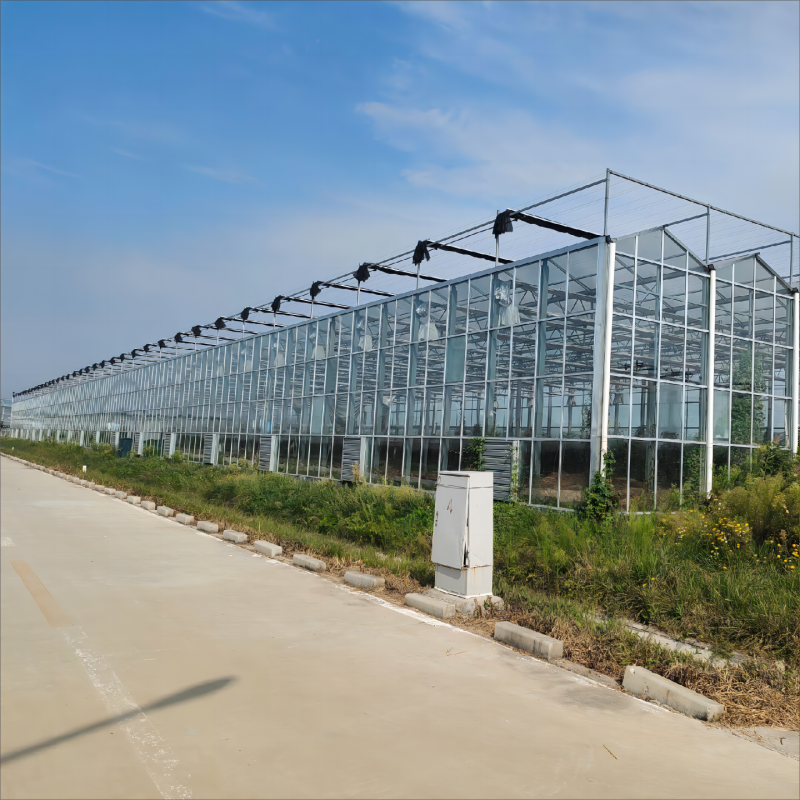
Modern agriculture faces mounting challenges as climate unpredictability, resource scarcity, and growing food demand create significant obstacles for farmers worldwide. Traditional outdoor farming methods often leave crops vulnerable to weather extremes, pests, diseases, and seasonal limitations that can devastate yields and threaten farm profitability. A large greenhouse emerges as a powerful solution to address these critical agricultural problems by providing controlled environment agriculture that transforms how farmers approach crop production and risk management.
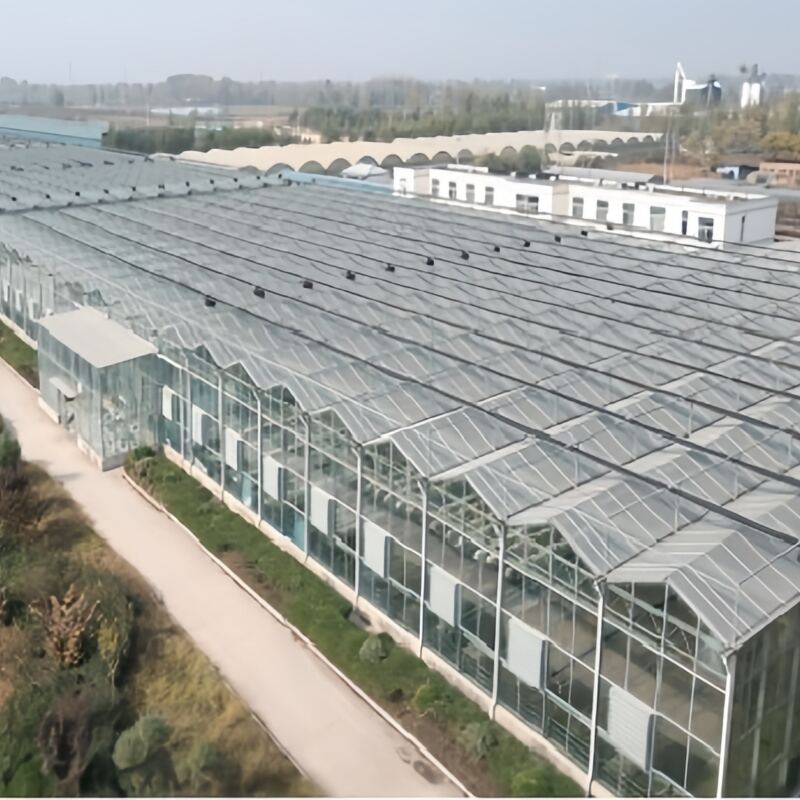
The implementation of a large greenhouse system addresses multiple interconnected farming challenges simultaneously, creating a comprehensive solution that enhances both crop security and operational efficiency. By establishing an enclosed growing environment, farmers gain unprecedented control over variables that traditionally determined the success or failure of their harvests. This controlled approach to agriculture represents a fundamental shift from reactive farming methods to proactive crop management strategies that deliver consistent results regardless of external conditions.
Climate Protection and Weather Risk Management
Extreme Weather Defense
A large greenhouse provides robust protection against devastating weather events that can destroy entire crops within hours. Hailstorms, torrential rains, high winds, and unexpected frost represent constant threats to outdoor farming operations, often resulting in total crop loss and significant financial hardship. The structural integrity of a properly designed large greenhouse shields crops from these destructive forces, maintaining optimal growing conditions even during severe weather events.
The economic impact of weather-related crop losses extends beyond immediate harvest damage, affecting long-term farm viability and market supply chains. Farmers operating within a large greenhouse environment report dramatically reduced weather-related losses, with some achieving near-zero weather damage rates compared to outdoor operations. This protection translates directly into more predictable revenue streams and reduced insurance costs.
Temperature regulation within a large greenhouse eliminates the sudden temperature fluctuations that stress plants and reduce yields. Advanced climate control systems maintain optimal temperature ranges throughout day-night cycles and seasonal transitions, ensuring consistent plant growth rates and preventing temperature-induced crop damage.
Seasonal Extension Capabilities
Traditional farming operations face significant limitations imposed by growing seasons, which restrict crop production to specific months and limit annual harvest potential. A large greenhouse extends growing seasons dramatically, enabling year-round production in regions where outdoor farming becomes impossible during winter months. This seasonal extension capability allows farmers to maximize facility utilization and generate revenue throughout the entire year.
The controlled environment within a large greenhouse enables multiple crop cycles per year, significantly increasing total production from the same land area. Farmers can plant, grow, and harvest crops continuously, optimizing their return on investment and meeting market demand during traditionally off-season periods when prices typically increase.
Cold-sensitive crops that cannot survive outdoor winter conditions thrive within heated greenhouse environments, opening new market opportunities for farmers in northern climates. This capability enables specialty crop production and premium pricing strategies that would be impossible with traditional seasonal farming approaches.
Pest and Disease Control Solutions
Physical Barrier Protection
Outdoor crops face constant threats from insects, rodents, birds, and other pests that can damage or destroy harvests while spreading diseases throughout crop populations. A large greenhouse creates a physical barrier that prevents most pest intrusions while allowing farmers to implement targeted control measures within a contained environment. This enclosed system reduces pesticide requirements and enables more sustainable pest management strategies.
The controlled access points of a large greenhouse facility allow farmers to monitor and regulate what enters the growing environment, preventing contaminated soil, infected plant material, and pest-carrying equipment from introducing problems. This biosecurity approach significantly reduces disease pressure and pest populations compared to open-field agriculture.
Beneficial insects and biological control agents work more effectively within large greenhouse environments where their populations remain concentrated and protected from weather disruption. This creates opportunities for integrated pest management programs that reduce chemical inputs while maintaining effective pest control.
Disease Prevention and Management
Fungal diseases, bacterial infections, and viral pathogens spread rapidly through outdoor crops, especially during periods of high humidity, wet weather, or temperature stress. A large greenhouse environment enables precise humidity control, air circulation management, and water delivery systems that minimize disease-favorable conditions while promoting plant health and resistance.
The enclosed nature of a large greenhouse allows for immediate isolation and treatment of disease outbreaks before they spread throughout entire crop areas. Early detection and rapid response capabilities within controlled environments prevent the catastrophic losses that often occur when diseases spread unchecked through open fields.
Advanced ventilation systems within large greenhouse structures maintain optimal air movement and humidity levels that discourage pathogen development while ensuring adequate air exchange for plant health. This environmental control creates conditions that favor crop growth while inhibiting disease organisms.
Resource Efficiency and Conservation
Water Management Optimization
Water scarcity and rising irrigation costs create significant challenges for farmers in many regions, while traditional irrigation methods often waste substantial amounts of water through evaporation, runoff, and inefficient distribution. A large greenhouse enables precision water delivery systems that dramatically reduce water consumption while improving crop hydration and nutrition uptake.
Drip irrigation, hydroponic systems, and recirculating nutrient solutions within large greenhouse operations can reduce water usage by 80-90% compared to traditional field irrigation. This efficiency improvement addresses both environmental sustainability concerns and operational cost management while ensuring optimal plant growth conditions.
The enclosed environment of a large greenhouse prevents water loss through evaporation and wind drift, while collection systems can capture and reuse condensation and runoff water. This closed-loop approach maximizes water efficiency and reduces dependence on external water sources.
Fertilizer and Chemical Efficiency
Outdoor farming operations lose significant amounts of fertilizers and chemicals through leaching, runoff, and wind drift, creating both economic waste and environmental concerns. A large greenhouse contains these inputs within the growing system, enabling precise application rates and preventing losses to surrounding areas.
Hydroponic and soilless growing systems within large greenhouse facilities allow farmers to deliver exact nutrient formulations directly to plant roots, eliminating waste and optimizing plant nutrition. This precision approach reduces fertilizer costs while improving crop quality and yield consistency.
The controlled environment within a large greenhouse enables targeted application of organic and biological inputs that might be less effective in outdoor conditions. This capability supports sustainable farming practices while maintaining high productivity levels.
Production Consistency and Quality Control
Yield Predictability and Planning
Traditional farming operations face significant uncertainty in crop yields due to weather variability, pest pressure, and environmental stress factors that make planning and market commitments challenging. A large greenhouse provides the environmental control necessary to achieve consistent yields that enable reliable production planning and contract fulfillment.
The predictable growing conditions within a large greenhouse environment allow farmers to schedule planting and harvesting activities with precision, optimizing labor utilization and market timing. This scheduling capability enables premium pricing strategies and reduces post-harvest handling costs through coordinated logistics.
Consistent environmental conditions within large greenhouse operations translate into uniform crop quality and appearance that meets strict market standards for premium produce categories. This quality consistency opens access to high-value markets that demand reliable supply and consistent product specifications.
Crop Quality Enhancement
Environmental stress factors in outdoor farming often compromise crop quality, reducing market value and limiting sales opportunities. A large greenhouse eliminates most stress factors while optimizing growing conditions for maximum quality development, including color, flavor, texture, and nutritional content.
The controlled atmosphere within a large greenhouse enables farmers to manipulate light levels, humidity, and atmospheric composition to enhance specific quality characteristics valued by different market segments. This capability creates opportunities for premium product positioning and specialized market development.
Protection from physical damage caused by weather, pests, and handling during outdoor growing results in higher percentages of premium-grade produce from large greenhouse operations. This quality improvement directly translates into increased revenue per unit of production.
Economic Benefits and Risk Reduction
Investment Return and Profitability
While large greenhouse construction requires significant initial investment, the operational benefits and risk reduction capabilities typically generate strong returns through increased productivity, reduced losses, and premium market access. The controlled environment enables intensive production methods that generate higher yields per square foot compared to field agriculture.
Year-round production capability within a large greenhouse maximizes facility utilization and spreads fixed costs across multiple crop cycles, improving overall economic efficiency. This continuous production model generates steady cash flow that supports business stability and growth investment.
Reduced input costs for water, fertilizers, pesticides, and crop protection measures within large greenhouse operations improve profit margins while supporting sustainable farming practices. These efficiency gains compound over time, creating long-term competitive advantages.
Market Access and Premium Pricing
The consistent quality and year-round availability of crops from large greenhouse operations opens access to premium market channels that pay higher prices for reliable supply and superior products. Restaurant chains, grocery retailers, and food processors often prefer greenhouse-grown produce for its consistency and quality attributes.
Large greenhouse facilities enable farmers to develop direct marketing relationships with high-value customers, eliminating intermediary costs while building brand recognition and customer loyalty. This direct market access improves profit margins and provides better market intelligence for production planning.
The ability to produce crops during off-season periods when market prices are highest allows large greenhouse operators to capture premium pricing opportunities that are impossible with traditional seasonal farming approaches. This timing advantage creates significant revenue enhancement opportunities.
FAQ
What initial investment is required for a large greenhouse operation?
The initial investment for a large greenhouse varies significantly based on size, technology level, and location, typically ranging from $25-40 per square foot for basic structures to $100+ per square foot for high-tech automated facilities. While the upfront costs are substantial, the return on investment often occurs within 3-7 years through increased productivity, reduced losses, and premium market access. Financing options and government incentives may be available to help manage initial investment requirements.
How much can a large greenhouse reduce crop losses compared to outdoor farming?
Large greenhouse operations typically experience 80-95% fewer weather-related crop losses compared to outdoor farming, with many facilities achieving near-zero weather damage rates. Pest and disease losses are also dramatically reduced, often by 70-90%, due to the controlled environment and biosecurity measures. These loss reductions translate directly into more predictable harvests and improved financial stability for farming operations.
What ongoing operational costs should farmers expect with large greenhouse facilities?
Ongoing operational costs for a large greenhouse include heating and cooling energy, specialized labor, maintenance, and system monitoring, typically representing 15-25% of gross revenue. However, these costs are often offset by reduced inputs for water, pesticides, fertilizers, and crop insurance, plus elimination of weather-related replanting costs. Energy costs can be managed through efficient design, renewable energy integration, and optimal crop scheduling.
Can large greenhouses be profitable in all climates and regions?
Large greenhouse operations can be profitable in most climates, though the specific crops, technology requirements, and market strategies vary by region. Cold climates benefit most from season extension and winter production capabilities, while hot climates gain advantages from cooling and water conservation. Success depends on matching the greenhouse design and crop selection to local climate conditions, energy costs, and market opportunities while leveraging the controlled environment benefits that solve region-specific farming challenges.
Table of Contents
- Climate Protection and Weather Risk Management
- Pest and Disease Control Solutions
- Resource Efficiency and Conservation
- Production Consistency and Quality Control
- Economic Benefits and Risk Reduction
-
FAQ
- What initial investment is required for a large greenhouse operation?
- How much can a large greenhouse reduce crop losses compared to outdoor farming?
- What ongoing operational costs should farmers expect with large greenhouse facilities?
- Can large greenhouses be profitable in all climates and regions?