 EN
EN


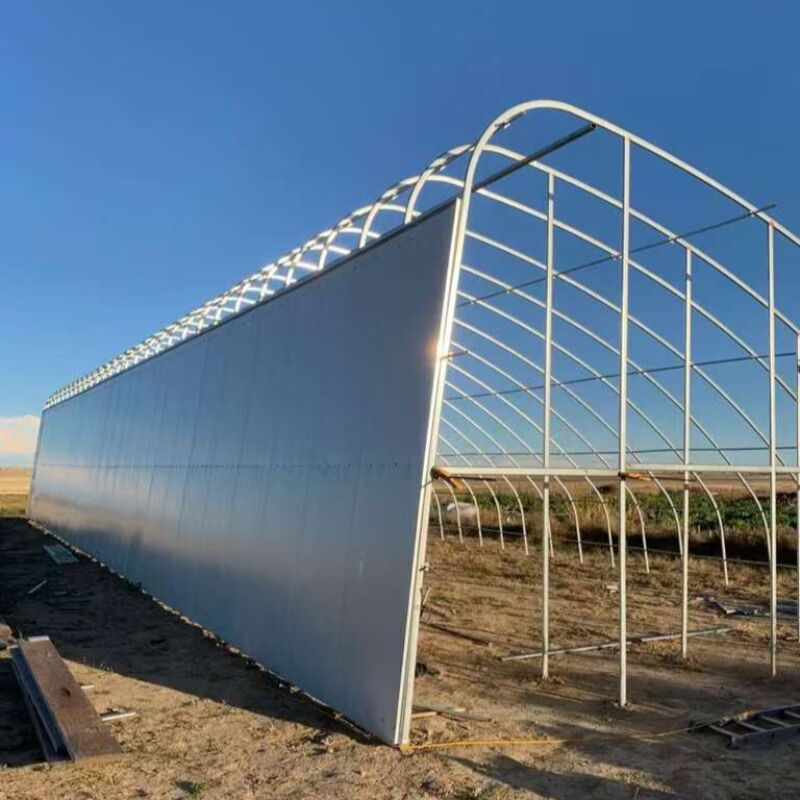
Agricultural producers worldwide face mounting pressure to increase food production while managing resource constraints and environmental variables. A large greenhouse represents a transformative solution that fundamentally alters the relationship between crops and their growing environment. By creating controlled microclimates spanning extensive square footage, these structures enable growers to manipulate critical environmental factors that directly influence plant productivity, from temperature and humidity to light exposure and carbon dioxide concentration.
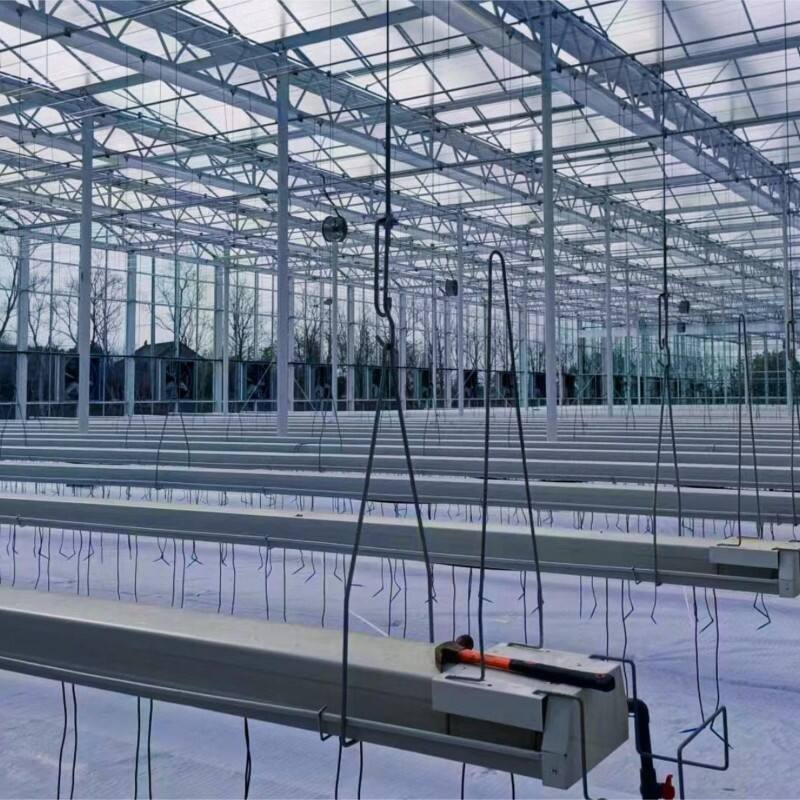
The mechanism through which a large greenhouse improves crop yield potential operates through multiple interconnected pathways. Unlike small-scale protected structures, expansive greenhouse facilities create economies of scale in environmental control while providing sufficient canopy space for commercial-scale production. The combination of climate management, extended growing seasons, protection from biotic and abiotic stresses, and optimized resource delivery systems creates conditions where plants can express their maximum genetic yield potential consistently across production cycles.
Environmental Control Systems and Yield Enhancement
Temperature Regulation and Metabolic Optimization
Temperature management within a large greenhouse directly impacts photosynthetic efficiency and metabolic processes that determine yield outcomes. Most crop species have defined temperature optima where enzymatic reactions proceed at maximum efficiency, typically ranging between 20-28°C depending on species. A large greenhouse equipped with heating, cooling, and ventilation systems maintains these optimal temperature ranges regardless of external conditions. This precise control prevents the metabolic stress that occurs when temperatures exceed or fall below optimal thresholds, allowing plants to allocate more energy toward reproductive growth and fruit development rather than stress response mechanisms.
The thermal mass advantage of a large greenhouse also contributes to yield stability. Larger enclosed volumes experience slower temperature fluctuations compared to smaller structures, creating a buffering effect that protects crops from sudden temperature swings. Night-time temperature management becomes particularly critical for yield determination, as many crops utilize darkness periods for specific developmental processes. By maintaining appropriate day-night temperature differentials, growers can influence flowering intensity, fruit set percentages, and biomass partitioning patterns that ultimately determine harvestable yield per square meter.
Humidity Control and Disease Pressure Reduction
Relative humidity management represents another yield-enhancing mechanism inherent to large greenhouse operations. Excessive humidity creates ideal conditions for fungal pathogens, bacterial diseases, and physiological disorders that reduce marketable yield. A large greenhouse equipped with dehumidification systems, proper ventilation design, and air circulation fans maintains humidity levels within the 60-80% range optimal for most horticultural crops. This control dramatically reduces foliar disease incidence, minimizing crop losses and eliminating the need for frequent fungicide applications that can disrupt beneficial insect populations and create pesticide residue concerns.
The economics of humidity control favor larger greenhouse installations. Commercial-scale facilities can justify investment in sophisticated climate computers, humidity sensors throughout the canopy, and automated vent control systems that respond in real-time to humidity fluctuations. This level of environmental precision simply remains uneconomical in smaller structures. The result is consistently healthier crop canopies with maximum photosynthetic capacity, longer productive periods, and higher percentages of premium-grade produce that commands better market prices.
Light Management and Photosynthetic Efficiency
Light interception and quality profoundly influence crop productivity, making the light environment within a large greenhouse a critical yield determinant. Modern large greenhouse designs incorporate high-transmission glazing materials that maximize photosynthetically active radiation reaching the crop canopy. Glass and specialized polymer coverings now transmit 90% or more of incident light, compared to 70-80% for conventional materials. This incremental improvement in light transmission translates directly to enhanced photosynthetic rates and biomass accumulation throughout the growing season.
Supplemental lighting systems in a large greenhouse extend the daily light integral, particularly critical during low-light winter months in temperate climates. High-pressure sodium lamps and LED grow lights can add 10-20 moles of photons per square meter daily, effectively extending the productive growing season and maintaining consistent yield across periods when outdoor production would be impossible. The economic viability of supplemental lighting improves with scale, as large greenhouse operators can negotiate favorable electricity rates and spread the capital cost of lighting infrastructure across many production zones.
Extended Growing Seasons and Production Cycles
Year-Round Production Capability
Perhaps the most straightforward mechanism by which a large greenhouse improves yield potential involves extending the effective growing season beyond the limitations imposed by regional climate. In temperate zones, outdoor vegetable production typically operates for 4-6 months annually, with the remainder of the year unsuitable for cultivation due to frost, freezing temperatures, or inadequate light levels. A heated large greenhouse transforms this seasonal constraint into a year-round production opportunity, potentially generating 2-3 complete crop cycles annually compared to a single outdoor season.
This seasonal extension multiplies annualized yield per unit area dramatically. For example, a tomato crop grown in a climate-controlled large greenhouse might produce 50-70 kilograms per square meter annually through continuous production, whereas outdoor cultivation in the same location might achieve only 10-15 kilograms per square meter during a single summer season. The economic implications of this yield multiplication justify the capital investment required for large greenhouse infrastructure, particularly in markets where fresh produce commands premium prices during traditional off-seasons.
Accelerated Crop Turnover
Environmental optimization within a large greenhouse accelerates crop development rates, shortening the time from transplant to harvest. When temperature, humidity, nutrition, and water supply remain continuously optimal, plants progress through vegetative and reproductive stages more rapidly than under variable outdoor conditions. This acceleration enables growers to complete more crop cycles within a calendar year, increasing the annual productive capacity of the facility without expanding physical footprint.
For leafy greens, herbs, and other short-cycle crops, the turnover advantage becomes particularly pronounced. A large greenhouse producing lettuce might complete 8-12 crop cycles annually, harvesting every 4-6 weeks, compared to perhaps 3-4 outdoor cycles in favorable climates. Each additional crop cycle represents incremental revenue and utilization of existing infrastructure investment, improving the overall return on capital employed in the large greenhouse operation.
Protection from Yield-Limiting Environmental Stresses
Weather Event Mitigation
Extreme weather events represent unpredictable but potentially catastrophic threats to outdoor crop production. Hail storms, heavy rain, strong winds, and unexpected frost events can destroy entire harvests within hours, creating complete crop losses and significant economic hardship for growers. A large greenhouse provides physical protection from these weather extremes, ensuring crop safety regardless of meteorological conditions outside the structure. This protection eliminates the yield variability and risk exposure inherent to field production, allowing growers to commit to supply contracts and market relationships with confidence.
The structural integrity of a large greenhouse designed to modern engineering standards withstands wind loads, snow accumulation, and precipitation that would damage or destroy field crops. Reinforced frameworks, impact-resistant glazing, and proper drainage systems protect valuable crops throughout their growth cycle. This reliability transforms agriculture from a weather-dependent gamble into a predictable manufacturing process, where inputs consistently translate to expected outputs without the random variation imposed by uncontrollable environmental factors.
Pest and Disease Exclusion
A properly managed large greenhouse functions as a semi-sealed environment that excludes many insect pests and disease vectors common in outdoor production. Screened vents, positive pressure systems, and controlled entry protocols prevent flying insects from accessing the crop canopy. This exclusion reduces pest populations below economically damaging thresholds without intensive pesticide applications, creating conditions where biological control agents can establish and maintain effective pest suppression.
The yield implications of reduced pest and disease pressure extend beyond simply preventing crop losses. Healthier plants with minimal stress allocate more photosynthetic resources toward fruit and biomass production rather than defensive compounds and repair mechanisms. The resulting crops exhibit faster growth rates, higher fruit set percentages, and extended productive periods that collectively increase total seasonal yield. Additionally, reduced pesticide use lowers production costs and creates marketing advantages for growers targeting premium markets that value reduced-spray or organic production methods.
Optimized Resource Delivery and Use Efficiency
Precision Irrigation and Nutrition Management
A large greenhouse enables implementation of sophisticated fertigation systems that deliver water and nutrients with precision impossible in field production. Drip irrigation combined with injector systems provides each plant with exactly the water volume and nutrient concentration required for optimal growth at each developmental stage. This precision eliminates the water stress periods and nutrient deficiencies that commonly limit yield in outdoor settings where rainfall patterns and soil variability create heterogeneous growing conditions.
The controlled environment of a large greenhouse allows growers to manipulate nutrient delivery strategies to influence yield outcomes directly. High potassium formulations during fruit development enhance fruit size and sugar content. Adjusted nitrogen levels can control vegetative vigor and promote earlier flowering. This level of nutritional manipulation requires the predictable growing conditions that only a large greenhouse environment provides, where growers can observe plant responses and adjust strategies without confounding variables introduced by weather fluctuations.
Water Conservation and Consistent Supply
Water use efficiency in a large greenhouse typically exceeds field production by 70-90%, as the enclosed environment minimizes evaporative losses and allows collection and recirculation of drainage water. This efficiency becomes increasingly critical as water scarcity affects agricultural regions globally. The ability to produce high yields with minimal water input expands agricultural potential into arid regions previously unsuitable for intensive crop production, opening new geographic markets for fresh produce.
Consistent water availability eliminates the yield-limiting stress periods that occur in rain-dependent agriculture or irrigation systems subject to water restrictions. Plants grown in a large greenhouse never experience drought stress that triggers early flowering, premature fruit set, or reduced fruit sizing. This consistency allows crops to express their full genetic yield potential throughout the entire growing season, maximizing the return on seed genetics, labor investment, and facility infrastructure.
Spatial Efficiency and Intensive Production Systems
Vertical Space Utilization
The protected environment within a large greenhouse enables vertical growing systems that dramatically increase productive area relative to ground footprint. High-wire tomato production systems, for example, train plants to heights of 3-4 meters, creating multiple fruiting trusses per plant and achieving yields impossible with traditional staked field production. Cucumber crops grown on overhead support systems similarly exploit vertical space, producing 10-15 fruits per plant across extended harvest periods.
This vertical dimension represents yield potential that simply cannot be captured in outdoor production, where plant support becomes impractical and weather damage increases with plant height. A large greenhouse provides the structural framework for overhead support systems, the climate control to prevent disease in dense canopies, and the economic scale to justify the labor investment required for crop training and maintenance. The result is production intensity measured in kilograms per cubic meter rather than merely per square meter, fundamentally changing the productivity equation.
Dense Planting Configurations
Environmental control within a large greenhouse permits plant densities substantially higher than outdoor production without increasing disease pressure or creating excessive competition for resources. Leafy greens in a large greenhouse might be spaced at 15-20 plants per square meter compared to 8-10 plants in field production. This density increase directly multiplies yield per unit area, as each additional plant contributes to total biomass production and harvestable product.
The feasibility of dense planting relies on the climate management capabilities unique to large greenhouse environments. Adequate air circulation prevents humidity accumulation within dense canopies. Supplemental lighting compensates for mutual shading. Precision fertigation delivers nutrients to each plant regardless of population density. These management capabilities transform high-density planting from a disease risk into a yield optimization strategy, extracting maximum productivity from every square meter of greenhouse floor space.
FAQ
What is the typical yield increase achieved in a large greenhouse compared to field production?
Yield increases in a large greenhouse compared to outdoor production vary significantly by crop type, climate zone, and management intensity, but typically range from 3-10 times higher on an annual basis. Tomato production in a modern large greenhouse might achieve 50-70 kg per square meter annually compared to 10-15 kg in field production. Leafy greens and herbs can show even more dramatic differences due to multiple crop cycles, with large greenhouse operations producing 8-12 harvests annually versus 2-4 outdoor cycles. The yield advantage reflects combined benefits of extended growing seasons, optimized environmental conditions, reduced crop losses, and intensive production systems that maximize space utilization.
How does the size of a greenhouse specifically impact yield potential compared to smaller structures?
A large greenhouse improves yield potential relative to smaller structures through several scale-dependent mechanisms. Larger enclosed volumes create more stable thermal environments with slower temperature fluctuations, reducing plant stress. The economics of automation and sophisticated climate control systems become viable only at commercial scale, enabling environmental precision impossible in smaller hobby structures. Large greenhouse operations justify investment in supplemental lighting, automated fertigation, and integrated pest management programs that optimize growing conditions. Additionally, larger facilities support efficient labor deployment and specialized crop management expertise that smaller operations cannot maintain economically, resulting in superior horticultural practices that maximize genetic yield potential.
Can a large greenhouse maintain consistent yields across all seasons of the year?
A properly equipped large greenhouse can maintain relatively consistent yields year-round, though some seasonal variation typically persists even in controlled environments. Winter production in temperate and northern climates requires supplemental lighting to compensate for reduced natural light intensity and shorter photoperiods, adding operational costs that some growers choose to manage through adjusted crop selection or reduced plant density. Summer production may face cooling challenges in hot climates, potentially requiring shade systems or evaporative cooling that slightly reduce light levels. However, modern large greenhouse operations routinely achieve 85-95% of peak yield performance throughout the year by adjusting environmental controls, crop timing, and variety selection to accommodate seasonal variations while maintaining commercial production levels that would be impossible in outdoor settings.
What infrastructure investments in a large greenhouse most directly impact yield outcomes?
Several infrastructure components within a large greenhouse disproportionately influence yield potential. Climate control systems including heating, cooling, and ventilation equipment enable the environmental precision that prevents stress and optimizes metabolic efficiency. Supplemental lighting systems extend productive periods and maintain photosynthetic rates during low-light seasons. Advanced irrigation and fertigation infrastructure delivers water and nutrients with the consistency required for maximum growth rates. High-transmission glazing materials maximize natural light penetration to the crop canopy. Finally, integrated crop support systems that enable vertical growing and high-density planting directly increase productive capacity per square meter. While all greenhouse components contribute to functionality, these specific investments create the controlled, optimized environment where crops can consistently express their maximum genetic yield potential.
Table of Contents
- Environmental Control Systems and Yield Enhancement
- Extended Growing Seasons and Production Cycles
- Protection from Yield-Limiting Environmental Stresses
- Optimized Resource Delivery and Use Efficiency
- Spatial Efficiency and Intensive Production Systems
-
FAQ
- What is the typical yield increase achieved in a large greenhouse compared to field production?
- How does the size of a greenhouse specifically impact yield potential compared to smaller structures?
- Can a large greenhouse maintain consistent yields across all seasons of the year?
- What infrastructure investments in a large greenhouse most directly impact yield outcomes?